Overlanding and expedition travel aren’t the same thing. With overlanding, the journey itself is the goal: you travel self-sufficiently and at your own pace through multiple countries, without a fixed route. With expedition travel, a specific goal is central, such as crossing a desert or reaching a remote area. Below we explain the difference and show where the two forms overlap.
What is overlanding?
With overlanding, the journey matters more than the destination. You travel through different countries in your own vehicle and decide the route as you go. Sometimes you stay a few days in a beautiful spot, sometimes you change course on a whim because another traveler gave you a tip.
You might drive on highways, but just as easily on unpaved mountain passes or remote forest roads. It’s not the terrain that makes the journey special; it’s the freedom to choose your own route. Many overlanders travel for months or even years at a stretch, combining nature, culture, and everyday life on the road.
What is expedition travel?
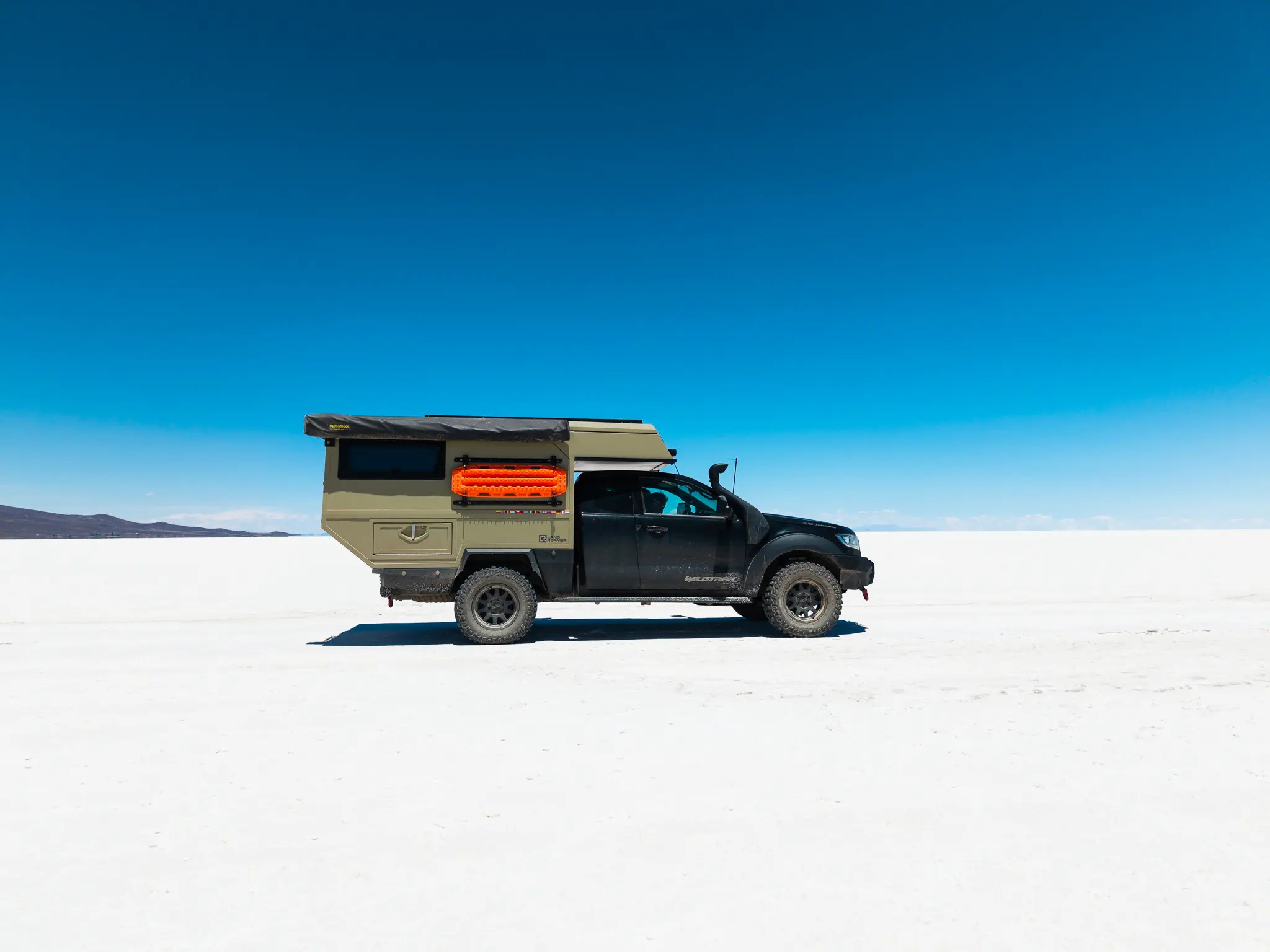
Expedition travel is usually focused on reaching a specific destination or overcoming a logistical challenge. Think of crossing a large desert, driving through a remote mountain region, or exploring an area with barely any facilities.
That calls for different preparation. Extra fuel, water, spare parts, and a high degree of self-sufficiency are often essential, not because it sounds adventurous, but because help can simply be far away.
Overlanding or expedition travel: the key difference
In short, the difference comes down to focus:
- Overlanding: the journey is central, no fixed end destination, flexible route, often longer periods on the road.
- Expedition travel: a specific goal or challenge is central, targeted preparation, a higher degree of self-sufficiency.
Your vehicle also decides how worry-free you travel
It’s not just the type of trip, your vehicle also determines how much you need to figure out in advance. Travel in a camper van, and you’re mainly checking whether the roads aren’t too rough. Drive a truck, and you’re checking whether bridges aren’t too low and roads aren’t too narrow. Anyone traveling with a larger vehicle is essentially always thinking about the route.
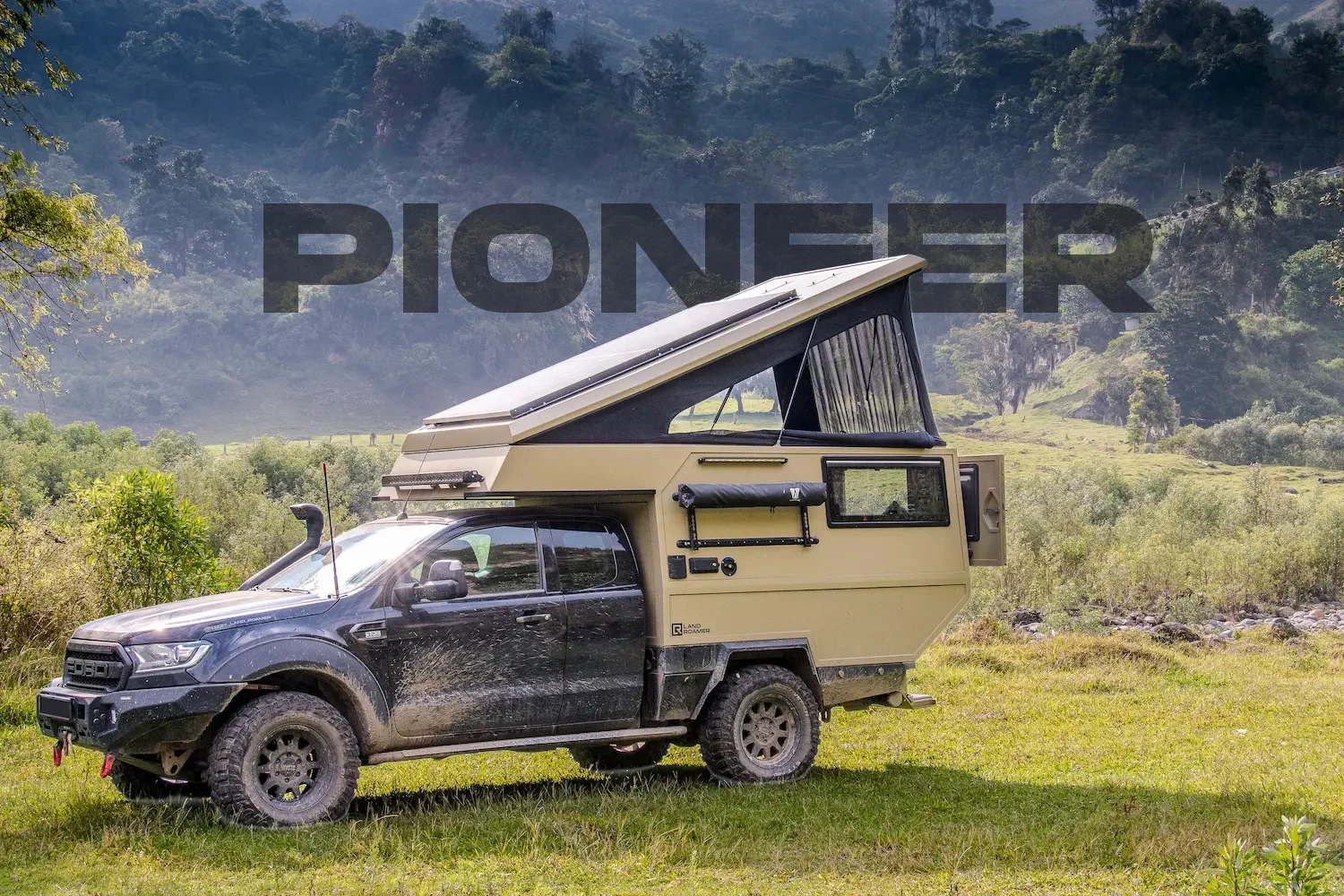
With a compact pick-up and cabin, like our Pioneer, that’s barely an issue. You don’t have to check bridges, underpasses, or road widths in advance, you just drive worry-free. That freedom to go anywhere, without constantly having to think about your vehicle, is for us the essence of worry-free overlanding and expedition travel.
The line isn’t always clear
In practice, the two forms often overlap. A trip from the Netherlands to South America is typically an overland journey. But when part of that trip takes you along a remote route through the Andes or across a vast desert, that stretch takes on the character of an expedition. Our own trip through La Guajira in Colombia is a good example of that: a solid stretch of expedition during a longer overland journey.
In other words: an expedition can be part of an overland journey, but not every overland journey is an expedition.
What suits you best?
For most travelers, overlanding is the best description. It’s not about seeking out extreme conditions, but about the freedom to go where you want, for as long as you want. Comfort, reliability, and self-sufficiency play a bigger role than tackling the toughest possible route.
And maybe that’s the most beautiful definition of overlanding: not traveling as far as possible from civilization, but being as free as possible on the road.
Heading out on a long overland journey, or gearing up for a real expedition? Either way, it all starts with the right vehicle. Read which pick-up suits overlanding and expedition travel best.
Your next step
Continue your journey

The Pioneer
See what it feels like inside
Take a walk through the cabin: seating area, bed, kitchen and more.


Discover Land Roamer
Who’s got your back?
Why 5 years of development means you’ll travel worry-free.
